Powder Coat vs. Galvanizing vs. Paint: The Best Finish for Outdoor Metalwork
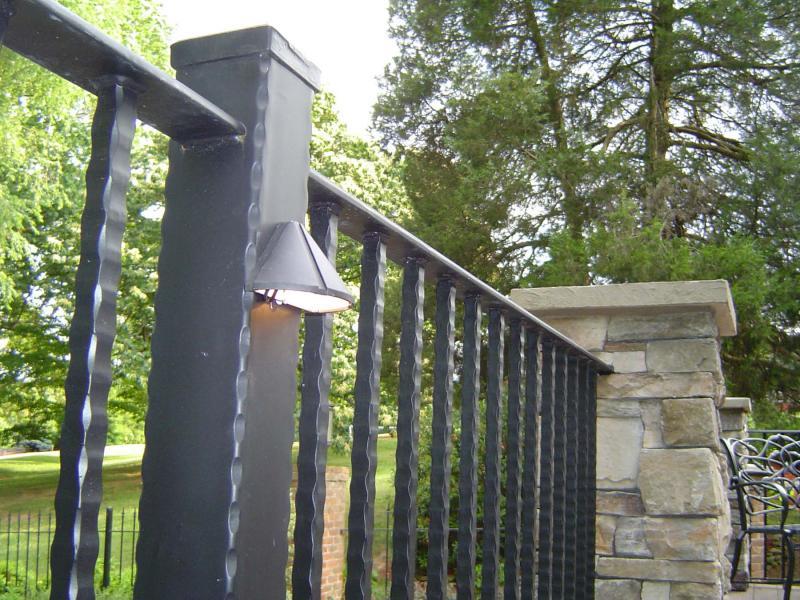
The finish on a piece of outdoor metalwork is doing two jobs at once: it protects the steel underneath from corrosion, and it provides the look you actually see. Most projects involve a choice between three real options — standard primer + paint, powder coat, and hot-dip galvanizing. Each costs differently, behaves differently in weather, and has a different service life.
This guide is a working fabricator's plain-English comparison. Where each finish wins, where each one loses, and how to think about the lifetime cost beyond the initial quote.
The short version
If you don't want to read the rest:
- Primer + paint is the cheapest, the easiest to touch up, and has the shortest service life. Best for sheltered locations or budget-driven projects.
- Powder coat is the most popular modern choice. Mid-range cost, 15–25 year service life, excellent color and finish quality. The default for most decorative outdoor metalwork.
- Hot-dip galvanizing (alone or with a powder coat top layer) is the premium option. Highest cost, 30+ year service life, the standard for industrial, marine, and high-corrosion environments.
For most East Tennessee residential projects, powder coat is the right answer. For lake-adjacent, marine, or industrial work, galvanized base + powder coat top is worth the premium.
How each finish actually works
Understanding the chemistry makes the comparison easier.
Standard primer + paint
A liquid primer coat is applied to clean steel, followed by one or more topcoats of liquid paint. The primer bonds to the steel and provides a corrosion barrier; the topcoat provides color, UV protection, and additional sealing.
The system is passive — it works by physically isolating the steel from moisture and oxygen. Once the coating is breached (a scratch, a chip, a missed weld bead), corrosion starts at that point and spreads underneath.
Powder coat
Dry powder pigment is electrostatically sprayed onto clean steel, then baked in an oven at 350–450°F. The powder melts and flows into a hard, uniform coating that's chemically bonded to the steel.
The system is also passive, but mechanically much tougher than paint. Powder coat resists scratches, chips, and UV degradation far better. When it does fail, it usually fails at edges where coating thickness is lowest — not in the middle of a panel.
Hot-dip galvanizing
Clean steel is dipped into a bath of molten zinc at around 850°F. The zinc reacts with the steel surface and forms a series of zinc-iron alloy layers, with pure zinc on the outside.
The system is active — galvanized steel works two ways at once. The zinc layer provides a barrier, and the zinc sacrificially corrodes in place of the steel at any small scratch or imperfection. Galvanized steel can have surface scratches and still not develop visible rust on the base steel.
Cost: real numbers
For a custom fabricated railing or gate in the East Tennessee market, the finish accounts for roughly:
- Primer + paint — 8–15% of total project cost.
- Powder coat — 12–22% of total project cost.
- Hot-dip galvanizing — 15–25% of total project cost.
- Galvanizing + powder coat top — 20–35% of total project cost.
In dollar terms on a typical $5,000 residential railing:
- Primer + paint: $400–$750
- Powder coat: $600–$1,100
- Galvanizing alone: $750–$1,250
- Galvanizing + powder coat: $1,000–$1,750
These ranges include vendor fees, prep work, and any required shop time. Smaller projects often pay relatively more per square foot of finished area than large ones.
Lifespan: how long each finish actually lasts
In typical East Tennessee outdoor conditions — high summer humidity, freeze-thaw cycles, intermittent rain — here's what realistic service life looks like for a fabricated railing or gate:
Primer + paint
5 to 10 years before first repaint cycle. Sheltered locations (covered porches, garage interiors) at the high end. Direct weather exposure at the low end. Touch-ups are easy and cheap, but they pile up; by year 15, most painted railings need full repainting and many need wire-brushing and primer refresh.
Powder coat
15 to 25 years before significant degradation in most outdoor conditions. The coating is much tougher than paint, but it's not immortal — UV gradually chalks the surface, and damaged spots (where a tree limb hits, where a vehicle bumps) can develop underlying rust if not repaired.
Touch-up is harder than paint; small chips can be addressed with a matching paint touch-up, but full panel repair usually means stripping and re-coating.
Hot-dip galvanizing
40 to 75+ years in typical residential or commercial outdoor conditions. The American Galvanizers Association publishes lookup tables showing service life as a function of zinc thickness and atmospheric corrosivity. For most of East Tennessee, the answer is "longer than the building."
The aesthetic drawback: galvanizing has a distinctive matte gray "spangled" finish that some consider industrial. For projects where the look matters, this is often addressed with a powder coat top layer.
Galvanizing + powder coat (duplex system)
Combined service life of 1.5–2.3x the sum of the individual systems — meaning a duplex system can last 60–100+ years in most conditions. The galvanizing protects the steel; the powder coat protects the galvanizing.
This is the premium specification for lake-adjacent, marine, industrial, and any project where access for future refinishing is difficult or expensive.
Where each finish wins
Primer + paint wins when:
- The project is in a sheltered or interior location.
- The budget is tight and the owner is prepared to repaint on a regular cycle.
- The shape of the part makes powder coating impractical (very large assemblies, complex internal cavities).
- Future repair access is excellent (you can touch up any spot easily).
Powder coat wins when:
- The project is residential decorative work (railings, gates, fences, signs).
- Color matching matters — powder coat offers far more color options than galvanizing.
- The owner wants 15–25 years of low maintenance without paying for galvanizing.
- The aesthetic needs to be sharp, smooth, and uniform.
Hot-dip galvanizing wins when:
- The project is industrial, structural, or load-bearing.
- The project is lake-adjacent, coastal, or in any high-corrosion environment.
- Future refinishing access is difficult or expensive.
- The look is acceptable as-is (matte gray, possibly with the duplex powder coat layer).
Duplex (galvanized + powder coat) wins when:
- Marine and lake-front exposure, especially Norris Lake, Watts Bar, Cherokee.
- High-value architectural projects where 30+ year zero-maintenance life is the goal.
- Industrial decorative — anywhere the look has to be polished and the structure has to last.
The mistakes worth avoiding
A few finish decisions that come back to bite homeowners and property managers:
Spray paint on outdoor steel. Aerosol spray paint isn't a finish; it's a temporary solution. Six months outdoors and it's failing.
Powder coat over unprepared steel. Powder coat is only as good as the prep. Skipping the sandblast or chemical clean step is a hidden quality failure that doesn't show up until year three.
Galvanizing over previously painted steel. Galvanizing requires bare clean steel. Existing paint or rust must be fully removed; otherwise the zinc doesn't bond.
Painted galvanized steel without primer. Paint doesn't bond well to fresh galvanizing. A proper bonding primer (or weathering period) is required, or the paint will peel within a year.
Mismatched finishes within one project. Hinges and hardware finished differently than the gate they're attached to will visually fail first and structurally fail next.
How to pick the finish for your project
A working decision framework:
- Where does it live? Sheltered / interior → paint or powder coat. Outdoor direct weather → powder coat. Lake-adjacent, marine, industrial → galvanized or duplex.
- What's the maintenance plan? Owner-occupied with willingness to touch up → paint is fine. Vacation property or absentee owner → powder coat or duplex.
- What's the architectural goal? Sharp color, smooth surface → powder coat. Industrial aesthetic acceptable → galvanized. Showcase architectural project → duplex.
- What's the budget horizon? 10-year horizon → paint or powder coat. 30+ year horizon → galvanized or duplex.
A good fabricator will push back if you specify the wrong finish for the environment. That pushback is worth more than the finish savings.
Get help picking the right finish
Coal Creek Iron Works fabricates with all three finish systems, and recommends honestly based on where the work lives. We've finished everything from interior decorative gates in primer + paint to mile-long greenway railings in hot-dip galvanizing.
Request a quote → or call (865) 216-8266.
FAQ
Can you refinish existing painted or rusted metalwork? Yes. Most refinishing projects involve wire-brushing or sandblasting the existing finish off, evaluating the underlying steel, and re-coating in the new finish system.
How long does powder coating take in the shop? Typically 5–10 business days from delivery of finished steel to vendor, depending on the powder coat vendor's queue. Galvanizing is usually 7–14 business days.
Can you powder coat aluminum? Yes. Aluminum takes powder coat very well. The bond chemistry is different than on steel, but the result is the same high-quality finish.
What's the most popular finish for residential railings in East Tennessee? Black powder coat over steel. It's the look most homeowners expect, the maintenance is low, and the service life matches typical home-ownership horizons.