Steel vs. Aluminum Railings: Which Is Better for Tennessee Weather?
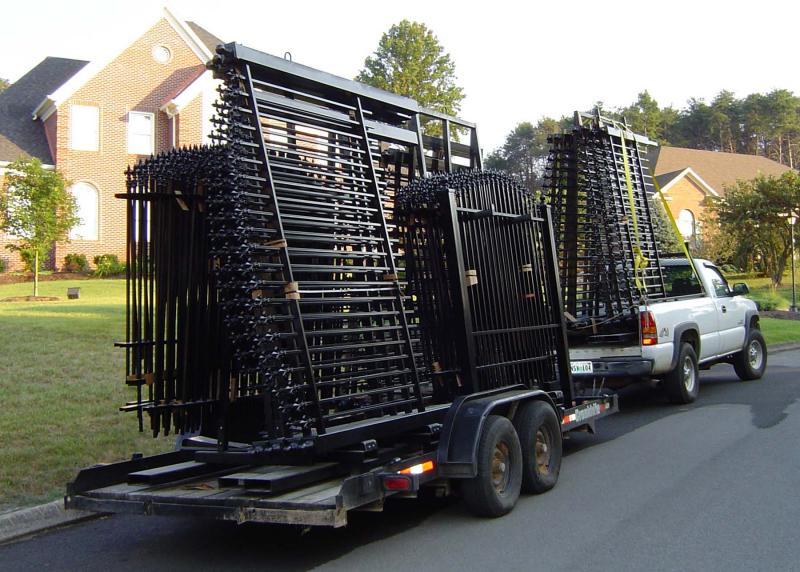
The two real material choices for custom outdoor railings in Tennessee are steel and aluminum. They look similar in a photo. They cost very differently. They behave very differently after 5, 10, and 20 years of East Tennessee humidity, freeze-thaw, and lake spray.
This guide is a fabricator's honest comparison. Where steel wins. Where aluminum wins. And how to pick the right one for your specific house, balcony, deck, or lake-side stair.
The short version
If you don't want to read the rest:
- Steel is stronger, takes more decorative work, looks the part for traditional architecture, and costs less upfront. With the right finish, it'll last 30+ years.
- Aluminum is lighter, won't rust, requires less long-term maintenance, and is often the right choice for lake-adjacent, shoreline, or pool-area railings. Higher upfront, lower lifetime cost in corrosive environments.
For most East Tennessee residential projects, steel is the more common choice. For lake houses on Norris, Watts Bar, or Cherokee — and for anything within 100 feet of a saltwater pool — aluminum starts to make more sense.
Material properties: what actually matters
Strength
Steel is roughly 3x stronger by weight than aluminum at structural grades. For a railing that needs to take a heavy impact — say, a commercial guardrail in a parking deck, or a structural balcony rail on a vacation rental — steel is the safer call.
For typical residential railings carrying code-required loads, both materials are perfectly capable. Aluminum railings are designed thicker or with internal reinforcement to compensate for the lower base strength.
Corrosion resistance
This is where the materials split sharply.
- Steel rusts. Unfinished, exposed steel will start visibly rusting within weeks in Tennessee humidity. Steel railings require a protective finish — primer + paint, powder coat, or hot-dip galvanizing — and that finish has to be maintained.
- Aluminum doesn't rust. It forms a thin oxide layer on exposure that protects the underlying metal. Even unfinished aluminum will hold up indefinitely in most environments.
For lake-adjacent projects, aluminum's corrosion resistance is the deciding factor for many homeowners. The math gets clearer over time: aluminum costs more upfront, but a 30-year horizon with zero rust maintenance often beats steel + repaint cycles.
Weight
Aluminum is roughly one-third the weight of steel for the same dimensions. This matters for:
- Older balconies where load on the existing structure is a concern.
- Removable railings (boat docks, seasonal installations).
- Shipping and handling on tall multi-story installs.
For most residential projects, weight isn't the deciding factor. For a multi-flight shoreline staircase being carried down a steep Norris Lake bank by hand, it absolutely is.
Cost
Honest cost comparison for custom railings in the East Tennessee market, fully turn-key:
- Steel railing, powder-coated — $90 to $180 per linear foot.
- Aluminum railing, powder-coated — $130 to $240 per linear foot.
- Steel railing with decorative scrollwork — $180 to $320 per linear foot.
- Aluminum railing with decorative inserts — $200 to $300 per linear foot.
Aluminum runs roughly 30–60% more per foot than equivalent steel. That premium often gets recovered over the lifetime of the installation through avoided repainting and rust repair.
Where steel wins
Decorative and traditional architecture. Wrought-iron-look railings — finials, scrolls, twisted balusters, monogrammed gates — almost always start as steel. The material takes heat-forming, bending, and welded ornamentation that's much harder to execute in aluminum.
Industrial and high-impact environments. Loading docks, equipment platforms, parking structures, anywhere a forklift or vehicle might tap a railing. Steel takes hits aluminum doesn't.
Cost-sensitive projects with sheltered exposure. Covered porches, interior stairs, garage railings. Anywhere the railing isn't taking direct weather, steel's lower cost is the practical choice.
Stair stringers and structural members. Even on projects with aluminum railings, the load-bearing stringers and frames are usually steel.
Where aluminum wins
Lake-adjacent properties. Norris, Watts Bar, Cherokee, Douglas — any project within sight of the water deals with constant moisture loading. Aluminum railings hold up indefinitely; steel railings need finish maintenance that gets expensive when the railings are on a hard-to-access shoreline.
Pool-area railings. Chlorine and saltwater pool environments are aggressive on steel finishes. Aluminum shrugs them off.
Coastal-style design. Thin pickets, cable infill, glass panel railings — the modern lake house look — translates better in aluminum because the lower weight allows thinner profiles without sacrificing rigidity.
Long-term, low-maintenance properties. Vacation rentals, second homes, properties where the owner isn't on-site to manage finish touch-ups. Aluminum's "install and forget" character is genuinely valuable.
High-elevation balconies and multi-story decks. Lower weight means lower load on the supporting structure — meaningful on older homes or weight-sensitive renovations.
A few myths worth busting
"Aluminum railings look cheap." Stock aluminum railings from a big-box store often do. Custom-fabricated aluminum railings — fabricated in the shop, welded, and powder coated — are visually indistinguishable from steel from any normal viewing distance.
"Steel railings always rust." Not if they're finished correctly. A hot-dip galvanized steel railing with a powder coat top finish should last 30+ years in East Tennessee with no significant rust.
"Aluminum is too weak for a real railing." Modern aluminum alloys at the right thickness and profile meet all residential and most commercial codes. Strength is a design problem, not a material problem.
"You can't get decorative work in aluminum." You can, but the techniques are different. CNC-cut decorative panels, cast aluminum elements, and modular decorative inserts all work. Hand-forged scrollwork is harder.
Hybrid solutions
A surprising number of East Tennessee projects use both materials together:
- Steel stair stringers with aluminum railings — load-bearing structure in steel, lighter user-contact components in aluminum.
- Steel posts with aluminum infill panels — the rigidity of steel posts with the corrosion resistance of aluminum panels.
- Steel railings with stainless or aluminum hardware — fasteners and brackets in non-rusting materials, even when the railing itself is steel.
A good fabricator will think in terms of the right material for each component, not a single material for the whole assembly.
How to decide for your project
Three questions that usually settle it:
- Where does the railing live? Direct lake exposure, pool deck, or industrial environment → lean aluminum. Covered porch, interior, traditional architecture → lean steel.
- What's the long-term maintenance plan? Owner-occupied with regular finish upkeep → steel is fine. Vacation rental or absentee owner → aluminum saves headaches.
- What's the visual goal? Traditional wrought iron look with detailed ornamentation → steel. Clean, modern, minimal profiles → either, with a slight edge to aluminum for the thinnest sections.
A real fabricator will help you make this call based on your specific project, not push the material they prefer to work with.
Get help picking
Coal Creek Iron Works has been fabricating both steel and aluminum railings across East Tennessee since 2005. We work with both materials — sometimes on the same project — and we'll recommend honestly based on where the railing lives, not what's easiest in the shop.
Request a quote → or call (865) 216-8266.
FAQ
Is stainless steel an option? Yes, for select applications. Stainless costs roughly 2–3x carbon steel, but offers steel's strength with aluminum's corrosion resistance. Most commonly used for marine hardware, food-service railings, and specialty architectural features.
Can you mix metals in one railing? Yes. Common combinations include steel structural elements with aluminum or stainless hardware. Direct welding of dissimilar metals is generally avoided; bolted or mechanical connections are used instead.
Which lasts longer — powder coat on steel or powder coat on aluminum? On aluminum, the powder coat is decorative; the underlying metal protects itself. On steel, the powder coat is structural to corrosion resistance, so any damage to the coating needs to be repaired promptly. Aluminum + powder coat is generally the lower-maintenance combination.